Pages

Thursday, 6 June 2013

Titanic: Switched at Birth Part II

Regular readers will know I'm fascinated about where the line falls in costume design between being inspired by others designs and creativity. After my post on the similarities between Amidala and the Cobra Woman you'll understand my excitement when the picture below appeared in my facebook feed yesterday.


1912, Les Modes (Paris)
Tailored suit for the afternoon by Linker & Co.
&
Kate Winslet as Rose in Titanic
Costume design by Deborah L. Scott


Obviously they are the 'same' outfit, but equally obviously changes have been made. I much prefer Scott's use of black on the collar and the stiff man shirt collar and tie underneath, very necessary for a film costume where the area framing the face is the most important part. Equally I think her skirt is a much neater, geometric shape and the thinner stripe of the fabric is much cleaner. However I do think something has been lost in the sizing down of the buttons, and while I think it was a wise costume design choice to lose the fur trim, I am an absolute sucker for vintage fur and part of me is disappointed by the choice to remove it. Almost unbelievably, Winslet's (or should I say Scott's) massive hat appears to be a scaled down version of the original, but is a much more opulent design.

I was blown away by how beautiful this ensemble (the Titanic one) was when I saw it at the V&A Hollywood Costume Exhibition. My major memory of this look is the famous shot of that amazing hat as her head turns to reveal her face, but the actual outfit below the neck is far more striking.

While studying I was lucky enough to be taught a class in costume design by Australian costume designer Margot Williams - probably most famous for costuming 'The Proposition' (2005). She used a moderately successful horror film that she worked on called 'Ghost Ship' (2002) as an example piece for us. The IMDB blurb for the film reads as follows: A salvage crew that discovers a long-lost 1962 passenger ship floating lifeless in a remote region of the Bering Sea soon notices, as they try to tow it back to land, that "strange things" happen... 

 If you're not too squeamish, here's the opening sequence of the film on YouTube. And believe me when I tell you that working with both vintage styling and blood together is the sort of thing most costume and makeup professionals dream about (as long as they don't think about the stressful practicalities too much). Not being a fan of the horror genre, I wasn't that interested in the rest of the film, but I love the opening 4 1/2 minutes.


I'm not unaware of the similarities between the two films: ocean liner where majority on board die, modern day crew revisit the remains... a happy coincidence used to illustrate my point.

Because of the practicalities all the 1962 costumes had to be made from scratch. Noone wants to get blood (even of the fake variety) on vintage clothing, but also they needed multiples: clean ones, bloody ones, half ones (or sometimes both halves at the same time for different actors) and whole ones.

I remember her telling us that she did extensive research into designs and styles of the period, and then drew all the dresses from memory without any first hand material in front of her to distract her. All the designs, though inspired by historical accuracy, were her own.

That has always stuck with me as how good costume design works. In theory.

However in practice it's never that simple.

How is copying a vintage design any different from choosing and styling an actual vintage piece from hundreds of other pieces, because it perfectly suits your vision? Or even buying a dress from the high street for an actress to wear? 

Scott made some very conscious decisions on customising the dress to suit her purposes. Nobody could accuse her of making a direct copy. But it's definitely an 'inspired by' piece. Either way it's fascinating to see the inspiration.

What are your thoughts? Is this clever costume design or downright plagiarism?

Friday, 10 May 2013

Peter and Alice

The storeroom where the meeting takes place
 
Last night I went to see Peter and Alice, a new play directed by Michael Grandage, about when Alice Liddell Hargreaves (Wonderland) met Peter Llewelyn Davies (Pan) at the opening of a Lewis Carroll exhibition in 1932. Oh, and stars Judi Dench and Ben Whishaw. Yep, that was pretty much all I needed to know to be interested. In August of last year I booked tickets, hunting through an already fast selling catalogue to ensure we found a night where we could sit front and centre, three rows back. Being close enough to see the genuine tears glistening in Judy Dench's eyes during the curtain call made the wait and the expense worth it.

I've never had much interest in Peter Pan, but have always been rather obsessed with Alice in Wonderland. Not so much the many film adaptations but the books, and particularly the original drawings. (Although, in a similar manner to Winnie-the-Pooh, it is hard to divorce them from Disney's interpretations.) As well as avidly reading both Alice in Wonderland and Through the Looking Glass when I was younger, I was also obsessed with one of my fathers' books by Raymond M. Smullyan, 'Alice in Puzzle-land', a book of logic puzzles based on Wonderland characters, which really brought the Lewis Carol spirit alive (I must have been a strange child!).


When we arrived in Britain we were based in Oxford, and were invited by a friend to dine at the top table of at Christ Church, where Charles Dodgsen aka Lewis Carol spent a large portion of his life. We walked down the spiral staircase from the staff room, which supposedly inspired the rabbit hole, and saw the various features of the room, such as the long necked fireplaces. But particularly I remember walking under the statue of Reverend Henry Liddell, and our friend said: "I walk under that every day and all I can think is 'That poor man, it doesn't matter what he did or didn't do in his life, he'll always be Alice in Wonderland's father'"

Which pretty much brings us to the point of the play. How do the Real Alice and Real Peter feel about being immortalised in fiction? What does it mean to go through life under the weight of such a burden? It's a complicated thing to achieve fame for doing nothing, to have everyone blur the lines between reality and fiction. As the two share their experiences, their current real life misery is contrasted with happy childhood memories, and the store room becomes a magical stage, full of Wonderland and Neverland imagery. They are joined by Lewis Carol and J. M. Barry, and by Alice and Peter Pan who represent their childhood, storybook naivety. It is a story, that in the wrong hands, could have been terrible, but playwright John Logan managed to get the slightly sinister nature of the relationships the children had with the authors, the world's intense possessive love of the stories, and the leads own battle with real life tragedy, pitch perfect.


Dench and Whishaw jumped perfectly from old and bitter to young and naive seamlessly. Brilliant actor Nicholas Farrell (above - one of those 'you'd recognise him when you see him' actors) played Lewis Carol with a wonderful stutter and a brilliant mix of kindness and creepy. And the rest of the cast were strong. The us of fictional Alice and Peter Pan was a wonderful conceit, contrasting the naive almost pantomime style acting and the authors words with real world emotions. It was a play full of humour, but I was swallowing back tears on more than one occasion.


The design, as you would expect with such a subject matter, was magical. It stayed respectful to our memories, but then took them to another level beyond imagination. Older Alice wore a 1930s style blue floral dress, and a hat with a big bow on it; older Peter wore a crumbled jacket with a green knitted waistcoat and grey trousers; wonderful allusions to the costumes of their fantasy namesakes, but subtle enough that my husband didn't even notice until I pointed it out afterwards. Fictional Alice's dress was a childhood dream, with stiff skirts and puffy sleeves and exquisitely tailored. If I have one fault, the hem of Peter's brown jacket was roughly hand hemmed, distracting enough to make me wonder if it was dodgy sewing or a deliberate attempt to make him look rumpled, but I don't pretend that this would have bothered anybody less costume obsessed.

At the beginning Peter and Alice meet in a crowded store room, complete with subtle details like a pirate ship, a mirror and a white rabbit toy mixed in with old boxes and junk. But once they began to talk properly about the past, the storeroom dissolved into a magical theatre, where lush red curtains were painted onto felt and we lived an breathed scenes of storybook fantasy. Particularly beautiful was the Neverland cavern where, through lighting and paint they somehow managed to recreate the effect of moonlight on water. It reminded me a lot of Matilda, (see my review here) in its beautiful way of combining childhood ideas for an adult audience. 


I have this belief that the best theatre should embrace a sort of suspended reality, a magical place that film and television can't go, and this play perfectly illustrates that idea. But it also requires collaboration under strong directing: script, acting and design have to work together in harmony in order to create a really successful piece of theatre, and this is where Peter and Alice really excelled.

Wednesday, 8 May 2013

Old jobs and new jobs and getting a Work / Life Balance

I've had a quiet Winter work-wise. Part of the problem with being self-employed, and more specifically working in the entertainment industry is that you can get so absorbed with working towards projects and deadlines that you completely forget about your own body's needs. So I'd work long hours, with high stress, low sleep and rubbish diet, and then crash afterwards. That's OK when you're in your teens and twenties, but now I'm a bit older my body doesn't take as kindly to that sort of behaviour.

Even more than the physical needs, I've come to a rather startling conclusion: I like spending quality time with my long-suffering husband, curling up with him and my cat on the couch of an evening; I like seeing my friends; I like having hobbies and spare time and learning how to dance; I like reading books and watching films and going to the theatre; redecorating my house and gardening and cooking healthy meals from scratch. My whole life I've imagined myself as a rebellious artistic type and now it turns out I'm rather boringly domesticated.

And I like sewing for myself. Sewing for a job means that last thing you want to do is come home and sew for fun. I have friends who seem to think I could imagine nothing more exciting that sewing clothes for them for free in my spare time. But for most of the last 10 or so years I've been lucky if I can pluck up the energy to re-sew on that button that fell off my coat. (You'd be amazed how many professional costumiers have clothes held together with safety pins because they can't be bothered to spend five minutes on themselves).

Call it a mid-life crisis, call it my biological clock even (although I still don't want kids), or maybe just call it getting older. But I rather like having a life outside of work.

So after working flat out making (many, many) Wenlock mascot costumes for the Olympic Games, then designing for two films pretty much in a row, I took a much needed rest. Lucky for me I have a very understanding husband who earns enough money to support me. I don't for a moment pretend I could do this on my own. But it's been good for him too. After he took on more responsibility and hours at work around Christmas we have found that we've got on better than we have for years with me being at home to pick up the pieces and make sure he has food to eat and clean clothes to wear. Yep, I'm not ashamed to admit that I became a bit of a Housewife. And while it was hard for the first few months retraining my body how not to survive on sheer adrenaline, I've actually quite enjoyed it. (Even more surprisingly, when I've confessed as much to friends, a lot of my career orientated feminist London peers have been verging on jealousy). After years of being a chronic workaholic, I've worked a few odd days, but mostly I've been learning how to enjoy the quiet time.

Until now.

Over the past few weeks I've taken up two new jobs. One is costume designing a feature film teaser (basically a trailer so you have something to show potential investors) with a producer that I've worked with several times before, which is great because I have a fair idea of how things are going to work from the outset. It's less than a week of filming, and even though it's set over a few days, it's contemporary and fairly straight forward (as much as any of these things ever are).

But I'm much more excited about the second job. I'm going to be doing freelance dressmaking tutoring for teenagers and adults. Ever since I started teaching my 4-8 year old nieces a few years ago, I've been flirting with the idea in the back of my mind that I really love helping others learn how to sew: to unleash their own creativity and a passion for making clothes. While studying I lived and worked in a girls boarding school as a junior resident mistress, and apart from the red tape and politics, I loved it. Now, with almost faultless timing, an opportunity has come up. Basically I have an agent who finds the work and worries about all that side of the business, and I get to see if this is something I potentially want to spend more time doing, but under the safety of someone elses umbrella and without the annoyance of organisational red tape.

I'm not giving up on costuming completely - I doubt I could even if I wanted to - but I'm going to be a lot more picky about the projects I take on. I'm going to choose a smaller number of projects that I really want to do, rather than just anything that comes my way. It's possible that if I was permanently employed in a costume house or workroom on a hourly rate I could have a more sensible life, but I enjoy being self employed, I enjoy the variety in the work and I go mad when I have no creative outlet and get stuck in a rut. Lets face it, if I enjoyed the regularity (sorry did you say monotony?) of a 9-5 desk job, I would have made a much more lucrative career choice.

I'm really excited about the idea of following a career path that goes some way towards getting a work/life balance. Where I can have work variety and flexibility and still follow my passion. But even better I now have a job where part of my self-promotion will be wearing beautiful clothes that I have made myself, so I might finally get the motivation to begin properly sewing for myself again.   

Wednesday, 1 May 2013

Lichtenstein at the Tate


Yesterday i had a meeting in town, and on my way I noticed a sign for a Roy Lichtenstein exhibition at the Tate Modern. I decided to have a pleasant sunny London town walk along the river and have an impromptu art gallery exhibition. Looking at paintings is one of my favourite things in the world. I love dragging my husband around the galleries of the world when we're on holiday to appreciate art I probably won't be able to see anywhere else. I can't stand tourists who just go an take a photo of the famous painting. If you can't enjoy looking at it in and experience the emotions you have looking at it person, why on earth do you think anyone, especially you, is going to want to see a photo of it?? But one thing I have noticed: there's usually a pretty good reason why the famous artists and paintings are the famous ones. Not always, I adore falling in love with a painting by someone I've never heard of in a corner of an art gallery, but look at Botticelli's Birth of Venus surrounded by thousands of other paintings of the same period and you understand why it's the one you've seen in art books.


Lichtenstein is one of those artists that everybody recognises his work, most teenagers with art aspirations go through a phase of thinking he's uber cool, but I didn't really know all that much about apart from the 'he does big paintings of comic books' thing. The thing about Lichtenstein is that because his point is about playing with texture and scale, enlarging small 'low art' pictures and turning them into 'high art', you are never really going to understand his work by looking at it in an art text book. Yes that is true of all artists to a point, but you can still appreciate the composition and technique of a Rembrandt or Vermeer in a picture. Even more modern artists like Mondrian and Picasso's ideas come across in 5" square prints. But they just don't for Lichtenstein, because what you are looking at is more or less the small commercial drawing that he was inspired by.

It's only when you see his precision work with dots in a 1.5m square canvas that his work comes alive.

But more importantly the exhibition is excellently curated. To those who believe art should be about final picture rather than ideas and motivation, it's very easy to be dismissive of what Lichtenstein did. But the way the exhibition is laid out: his different styles and themes, his understanding and homages of other artists such as Picasso and Monet. The most hardened cynic could not but learn to appreciate the true artist behind the images from the information and layout of this show. It's on until May 27th and I cannot recommend it highly enough if you have any enjoyment of art.

Without sounding too much like an art wank, when walking into the gift shop at the end of the exhibition I had that feeling you get where you enjoyed yourself so much that you want to buy a memento of what you saw. But it's like I said above, his work is pretty much about small scale commercial art made into large scale high art paintings, so shrinking them down to be printed onto mass produced mugs and t-shirts kind of defeats the point. Although I think he of all people would appreciate the irony.


Monday, 29 April 2013

How Not to Style a Vintage Dress Pattern

Warning, this post contains ranting!

Looking at retro and vintage pattern ranges for a jacket pattern recently reminded me of a bugbear of mine. I can't stand the majority of styling on the photos for vintage pattern covers. I think a lot of them aren't the best constructed garments or fabric choices, but it's more than that. They just don't seem to understand what people who are buying vintage patterns actually want.

To be fair, I've picked a worst case example, but there's still no excuse for sloppy marketing. Here's the original 1945 pattern illustration for Vogue Vintage pattern V1136. Isn't it stunning?

I'll be the first to admit fashion drawings are stylised perfection rather than anatomical accuracy, but the point of both drawing and photo is to be aspirational. To make us believe that we could look that good if only we made that dress. 

With that in mind, here is the contemporary photo they chose to advertise the pattern.


I showed the picture to my husband and his response was "That's not the same dress". For a start the pose seems to actually have been designed ensure the beautiful cut of the neckline, sleeves and waist is lost, and the styling is awful. To me this photo looks like something from the late 80s or early 90s, (I'm thinking it wished is was Pretty Woman-esque). It's like they are trying to hide everything that makes the pattern desirable in the first place.
Don't they realise that people who buy vintage patterns do it because they actually like the vintage look?

Butterick are doing better with their Retro range, trying to appeal to a younger audience with their own and  their 'Patterns by Gertie' range, but even they have kind of missed the some of the point of vintage patterns. I know I've said it before, but you simply can't expect to look vintage without some nod to appropriate underwear. You don't have to to go to What Katie Did to get an authentic look. If girdles are required, wear some control top tights or magic support pants. If it's a busty period like the 1950s, at least wear a good balconette bra (As opposed to a push up bra which will push them together, a balconette will push them up separately).

Here's Retro Butterick pattern B5748
The pattern sketch for Butterick B5748

And here's their photo.

It's a gorgeous fabric choice and the styling is pretty good. It manages to look both fresh and modern and late 50s (the pattern is 1960). But there's a huge problem: this woman has NO shaping from her bust to her waist. I'm all for celebrating different figure types, and she would be a great model for a 20s or late 60s mod pattern, but they could at least have attempted to get a 50s style figure for their photo. Let's be honest, at least part of the reason most of us like the vintage look is because we have curves and are sick of coming up against modern fashion and clothes cut for an idealised, boyish, supermodel figure.

Surely if you want buy a reissue of a retro pattern it's because shock, horror, you're actually after a degree of authenticity? I'm by no means saying these pictures have to be styled as period reproductions, but they should at least aspire to give us the glamour and elegance that we love about vintage clothing.

In fact one of the best retro/vintage style patterns I found from the big brands was this Butterick pattern that's just being sold in the normal dress section. That's right, apart from the obvious fun the stylist had, there's no attempt to sell this as anything other than a modern pattern. With a tiny bit of tweaking, a cute fabric and a few more inches on the hem this would make a fabulous swing dancing dress (and actually isn't dissimilar to one I paid quite a bit of money for). The cut and the details are great: I love the classic shape of the yoke and the waist darts. Sure the flower is over-sized and the belt modern, but her hair and makeup is a pretty convincing 1940s style. Am I the only one concerned that this makes a more authentic nod to 'retro styling' than a lot of the patterns that are sold as authentic period reproductions?


This dress is so flattering to so many figure types. I just love the back yoke detail.


Just to show you that I'm not a complete grump, here's some examples of how to style a vintage pattern photoshoot properly. I'm not saying that these are 100% period accurate, but they are stylish and gorgeous and more importantly, you'd actually aspire to look as elegant as the girl in the photo in your own completed garment. They are perfectly aimed at the modern girl who wants to sew authentic period dress patterns.

Vogue 2787
Butterick B5895. Patterns by Gertie

Wednesday, 17 April 2013

Make do and Mend Jacket Pattern

Watching The Great British Sewing Bee (Ep. 3) last night, both their jacket making and their remarks on 40s wartime sewing, I was reminded of my mission to make a 'Make Do and Mend' Suit. The update on that is that I've almost finished the skirt (which I'll put up pics of soon) but because I decided to make it 6 gore rather than 4 (You'll understand why when you see it) I need to do some creative piecing, which I'm hoping to acquire scraps from the jacket for.

I found it really interesting that Ann commented on how much more fabric there was in 1940s trousers with the waist pleats and baggy style. This added to the fact that people were naturally shorter then and very slim due to surviving on wartime rationing, so I don't feel quite so bad that I was unable to get an a-line skirt to fit me from a single pair of trousers.

But I need to start actually making the jacket.

I'm not a great wearer of jackets. I realised I've never actually made a proper tailored suiting jacket. I've made costume coats, tailored bodices, silk jackets and waistcoats, but never a fashion jacket, so I've decided that buying a commercial pattern to follow is the way to go. I also want something with a good size range so I don't have to fiddle around with trying to scale up a small size actual vintage pattern.

I don't always like to use commercial patterns as I find they are really expensive and often you can get a much better shape and fit drafting your own. But if I do, I have a rule that it has to be one of three things:
  1. Really basic, so I can use it almost as a block to adapt it to use it for many different items of clothing,
  2. One of those multi patterns that makes about 7 or 8 different items so I get value for money.
  3. A really complicated design for a special project that I would take me a long time to patternmake myself (vintage, evening, costume, etc)
So I had a look online for a vintage or classic jacket pattern and was really disappointed. I thought I would be spoiled for choice but there really wasn't many that were tailored to a high enough quality to tempt me. I was determined that it had to have princess seams, not only because they give the most flattering fit if you have curves, but they're also the easiest to fit properly. I think I've finally decided on this Vogue Claire Shaeffer Custom Couture Collection Jacket No V8333. It's a beautiful classic hourglass shape which I can add period collar, pocket and cuff details if I choose, but also has an interesting seam detail to stop it from being too boring.

So watch this space.


Friday, 12 April 2013

Is Britain still the home of Costume Drama?


When I was growing up, the BBC was unquestionably your one stop shop for period drama (or Frock Flicks as I like to call them). The air of respectability that surrounded those three hallowed letters, backed up by a catalogue of quality television mini-series based on classic literature, ensured that it was instantly recognised as a quality brand world wide. When costume dramas were on the verge of losing their mainstream appeal, 1995 brought 'Pride and Prejudice', which almost 20 years later, is still unsurpassed in popularity. For most people, particularly those old enough to have watched it first time round, there really is no competition between it and any other mini-series. But there were lots of other classic novel adaptations, a wonderful way of introducing us to lesser known works with complex themes, like 'The Barchester Chronicles' (1982), Tom Jones (1997) and 'Middlemarch (1994). But something happened to make producers believe that these miniseries lack the pace and gloss that modern audiences apparently expect.

Even then it wasn't without competition. The  excellent Canadian production of 'Anne of Green Gables' (1985) still stands the test of time. America and Australia were happily romanticising the early settlers with shows like 'Dr Quinn, Medicine Woman (1993) and 'All The Rivers Run' (1993). But it was well accepted that we could not compete with Britain's intellectual heritage and Shakespearian trained actors.


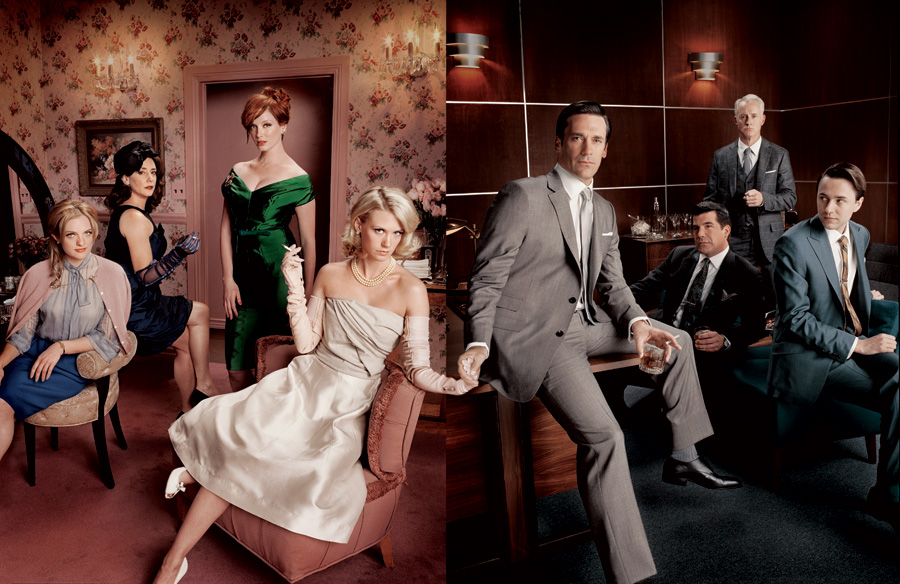
In 2007 'Mad Men' crashed onto the scene, changing the way we look at period television making forever. It's not only unique for having a subject matter that was interesting to more than just the silly romantic females who are the perceived audience of BBC adaptations (although why TV and film versions of intelligent literature should have this stigma is baffling to me, especially considering the males in my family enjoy them equally as much as the females), but also raised the bar high in its attention to authentic detail. It was not the first period drama made in the USA, but it was certainly the first to affect the public consciousness internationally the way it did, especially the fashion world.

HBO has had great success with historical drama. First there was the WWII drama Band of Brothers (2001), followed by Deadwood (2004) set in the wild west, 'Rome' (2005), 'John Adams' (2008), 'The Pacific' (2010),  and my personal favourite 'Boardwalk Empire' (2010). These are largely set in 'boy's own' adventure scenarios: wars, westerns, gangsters, etc. They are making a conscious effort not to fall under the traditional period romance genre. Even their more traditional offerings, 'Mildred Pierce' (2011) and 'Parade's End' (2013) are challenging stories filled with largely unsympathetic characters, aimed at a highly intelligent and literate audience. Or at least those who wish to believe themselves thus.

Showtime is another American production company that has brought us successful productions such as 'The Tudors' (2007) and 'The Borgias' (2011), shows that play fast and loose with historical accuracy, but make up for it with sumptuous production values and a glossy filming style.


The Tudors

My biggest problem with a lot of these series (along with 'Game of Thrones' which although very much has the feel of the rest of these adaptations, is fantasy not historical), is that they seem to equate gritty entertainment and credibility, with lots of naked breasts (and the rest). Now I'm not at all prudish, I probably watch more risque art house films than most, but I get quite bored of being sold two dimensional sex object females alongside complicated and powerful male characters. Sex scenes in context are great, but a lot of the time it veers towards 'look here are some tits' rather than essential character driven plotlines. If you don't believe me, see how little airtime male nudie bits get on screen compared to their female counterparts.


These shows are determined to be a anathema to the new wave of British period dramas that have flooded the scene. I can only conclude that based on the popularity of Jane Austen, British television producers looked for more 'female friendly' period novels to adapt, and eventually created there own stories as well. I am obviously talking about the hugely popular 'Downton Abbey' (2010), which I think in spite of it's criticism is a really great show that doesn't pretend to be anything other than what it is: pretty, light and fluffy Sunday night entertainment. I'm the first to admit that if they got rid of Maggie Smith they wouldn't have a show, and the plot lines can verge on the ridiculous, but that makes it no different than a lot of TV except with the added advantage of having pretty scenery and costumes. And lets face it, there's nothing wrong with that. It is sumptuously beautiful with charming characters and has never pretended to be high art. 


When Benedict Cumberbatch was promoting 'Parade's End' he, in what I can only cynically presume was a well planned publicity stunt, called 'Downton Abbey' 'f**king atrocious'. I personally found 'Parade's End'  barely watchable, except for the fantastic Rebecca Hall (and it's kind of a problem when you find yourself rooting for the villianess), but Cumberbatch's remark was a very conscious attempt to distance one Edwardian set show from the other, to divide period television into high and low art. The logic is: if you don't like our show, then it's your fault for not being intelligent enough. But he is also giving American producers kudos for the adaptation of serious literature, as opposed to the British. That's quite a turn up for the books.

Along with 'Downton Abbey' you have less successful shows like 'Cranford' (2007), 'Lark Rise to Candleford' (2010), the new 'Upstairs Downstairs'(2010), 'The Paradise' (2012) and  'Mr Selfridge' (2013), series so sickly sweet and twee that I found myself getting rapidly bored with them.  In fact if I wasn't such a enormous 'Entourage' (and therefore Jeremy Piven) fan, I'm not sure I could have stuck with 'Mr Selfridge'. While the matched costuming of the Pratt sisters in 'Lark Rise' was one of my favourite aspects of the show, the latter two series seemed hugely inconsistent in the quality of their costuming. This seemed particularly apparent in the costuming of upper class ladies, who are usually the most fun, and therefore easiest, to costume.

Don't believe me? Look below. You could argue that these are not sympathetic characters, and so are meant to look a bit jarring to the eye, but they are also characters renowned for being fashion leaders in their society, and so if not tastefully dressed, should at least be immaculately tailored.

The Paradise: Katherine Glendenning. One of my friends suggested there was a last minute cast change because none of her dresses sat well around the bust. I also couldn't get past the fact it looked like a lot of the costumes looked like well made calico toiles with trim added

Mr Selfridge: Lady May (left). It may be the fault of her terrible wig or her very tiny frame, but all of her dresses seemed to hang strangely off her body, making her look like a child dressed up in her mother's clothes. The fabric on the waistband does not sit well and those side sleeves stick out rather than drape around her arm, making this look like something they grabbed off a hire rail. Mrs Selfridge (right) looks well dressed and well costumed.


As a foreigner living in England, I appreciate the romance and glamour of Britain's history and upper classes much more than my British friends. It's the romance of the exotic and foreign. However even I have to admit that most of the period films and television that is produced in Britain seem to be aimed at a starry eyed American audience, starring Hollywood actors putting on poor British accents, and gentle, dumbed down scripts. Is this really what American's want though? The more intelligent shows that are being produced in America would suggest otherwise.

It's possible ITV is to blame who, although have made wonderful series like 'Brideshead Revisited' (1981), have lacked the BBCs pedigree. In 2002 they followed in the BBC's footsteps by remaking 'The Forsythe Sage' (2002) and successfully made adaptations (although not necessarily always making successful adaptations) of Jane Austen in 2007, but it was in 2010 that they achieved enormous international success with 'Downton Abbey'. This may have caused the BBC to act in kind. The BBC have made excellent adaptations of 'Sense and Sensibility' and 'Jane Eyre' in the past decade, but their choice of books shows they are playing it extremely safe. No more for them the obscure literature classics when you can rehash a popular book for the umpteenth time. Then there was the brilliant 'Dancing on the Edge' (2013) which was relegated to BBC2. It's slow moving, complex storyline filled with interesting characters and beautiful costumes was excellent, and yet like with most of Stephen Poliakoff's work, I felt strangely restrained and disconnected watching it. It's like he is trying to keep the audience firmly at arm's length, determined for them not to get involved with any of the characters.


I started writing the post because I have been ill for the past few weeks, and so have caught up on many episodes of 'Miss Fisher's Murder Mysteries', an Australian show that my Mum gave me on DVD for Christmas (although I believe it is currently screening on Alibi in the UK). It's about a lady detective in the 1920s, and as I have already mentioned in a previous post, is not faultless. The wonderful lead actress Essie Davis is a good decade to old to be playing a Bright Young Thing, and yet the more you watch it the less it matters. This series is everything you want in a 1920s period drama: sparkling characters, sumptuous costumes, sassy dialogue and sizzling sexual chemistry. It has taken the British idea of fun, light hearted, period entertainment and knocked it out of the ballpark. There's enough of the Australian brashness and 'calling a spade a spade' mentality that allows this series to unashamedly be exactly what it is. And it's all the better for it.

(I promise to devote an entire post to it's wonderful costumes soon)


But I want shows that fall somewhere in between. Classic Miniseries like 'The Buccaneers'(1995), 'North and South' (2004) and 'The Tenant of Wildfell Hall' (1996) (and I've just realised that completely coincidentally these were all books written by women) took less popular classic novels with complicated characters, relationships and themes and adapted them into beautifully made TV shows. Even the biggest intellectual snob could not call these 'f**king atrocious', and yet they were undoubtedly accessible entertainment for the masses. They had strong male and female characters who were both likeable AND flawed at the same time. The costumes were absolutely stunning but (almost) never stole the show. There was love, romance and happy endings, as well as dark and complicated themes.

Is that really too much to ask?